
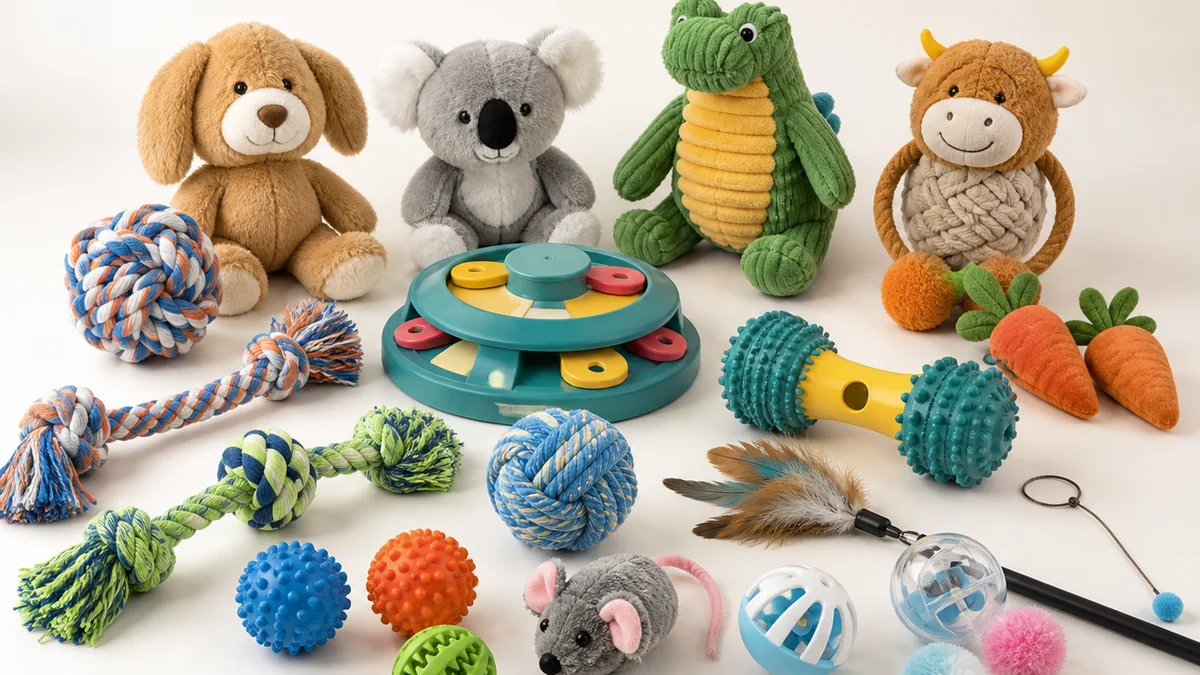
Pet toys are attractive for retailers because they are visible, giftable, seasonal, and easy to bundle. They can also create sourcing problems when buyers compare only appearance and ignore material, pet size, play style, packaging, and inspection standards. A rope toy, rubber chew toy, plush toy, teaser wand, puzzle toy, and seasonal toy may all sit in the same category, but they require different checks before wholesale ordering.
This guide is written for pet stores, importers, wholesalers, and e-commerce sellers sourcing pet toys from China. It focuses on how to build a practical wholesale order rather than chasing the lowest photo-based quote.
Classify Toys by Use, Not Just Appearance
The first step is to classify toys by use case. This makes quotations more accurate and helps avoid mismatched materials.
- Chew and bite toys: rubber, TPR, nylon, rope, and stronger construction for dogs with different bite levels.
- Interactive toys: puzzle toys, treat-dispensing toys, training toys, and owner-pet activity products.
- Plush toys: seasonal plush, squeaky toys, comfort toys, and giftable designs.
- Cat toys: cat teaser wands, balls, tunnels, scratcher add-ons, feather toys, and catnip-related products.
- Outdoor and training toys: throwers, flying discs, tug toys, and durable outdoor play items.
Material Choice Affects Price and Risk
Photos often hide the difference between material grades. For rubber and TPR toys, buyers should compare hardness, odor, surface finish, flexibility, color stability, and whether the toy is suitable for the target pet size. For rope toys, check fiber type, knot strength, color bleeding risk, and loose ends. For plush toys, check fabric, stitching, filling, squeaker placement, and seam strength.
When requesting samples, do not only ask for the cheapest option. Ask for two or three material levels so you can compare price and quality against your retail positioning.
Safety and QC Points to Confirm
Pet toy safety depends on the market, product type, and intended use. Xinji Pet Supplies does not treat every toy as the same inspection checklist. The following points are common starting checks:
- Sharp edges, loose parts, detachable accessories, and choking-risk components.
- Odor, color bleeding, surface residue, and material consistency.
- Stitching strength for plush toys and knot strength for rope toys.
- Size suitability for dog or cat use.
- Packaging warnings, label language, barcode needs, and carton protection.
- Sample consistency compared with bulk production.
For buyers building a private label program, combine toy QC with the private label packaging QC checklist before approving mass production.
MOQ Depends on Material, Color, and Packaging
Pet toy MOQ is not a fixed number. Existing colors and standard packaging usually allow more flexible trial orders. Custom colors, printed retail cards, custom boxes, branded hang tags, or new molds increase MOQ and lead time. If you are testing a new market, start with practical standard options and upgrade packaging after you identify repeat winners.
For smaller test orders, review low MOQ pet supplies planning. Low MOQ is possible for some toy lines, but it works best when SKUs are grouped clearly and customization is controlled.
Packaging Should Fit the Sales Channel
Retail stores need shelf presentation. E-commerce sellers need packaging that supports shipping and customer experience. Wholesalers may need carton clarity, barcode control, and mixed SKU packing lists. Packaging choices for pet toys commonly include polybags, hang tags, header cards, color boxes, display boxes, and bundle packs.
Before finalizing packaging, confirm the product size, carton quantity, inner packing, barcode placement, carton mark, and whether your market requires warning text or age/pet-size guidance.
Build a Mixed Toy Order With Clear Groups
A strong wholesale toy order usually includes both stable items and test items. For example, one order might combine rope toys, rubber toys, plush toys, cat teaser wands, and seasonal designs. This can work well inside a mixed container supply plan, but every SKU should have clear quantity, packaging, sample status, and QC points.
Send reference photos, target pet size, expected retail channel, quantity range, packaging level, and destination country. A better toy brief leads to better comparison, fewer sample surprises, and a cleaner reorder path.