
Low MOQ is attractive because it helps buyers test new pet products without committing to a large order. But low MOQ can also create hidden problems: inconsistent packaging, higher unit cost, limited color options, longer coordination time, and suppliers that are not suitable for repeat orders. A good trial order should test market demand while keeping the supply chain realistic.

This guide explains how pet stores, e-commerce sellers, and importers can plan trial orders for pet toys, dog accessories, cat products, grooming tools, apparel, feeding products, and selected private label items.
1. Define what the trial order must prove
A trial order is not only a smaller purchase. It is a test. Before asking for low MOQ, decide what you need to learn:
- Does the product fit your target customer and price range?
- Is the material quality acceptable for your sales channel?
- Can the packaging support retail display or e-commerce delivery?
- Can the supplier repeat the product with stable color, size, and workmanship?
- Is the product worth developing into a private label SKU?
If the answer is unclear, the trial order should stay simple. Choose fewer variants and collect better feedback, instead of spreading budget across too many unrelated products.
2. Choose low-MOQ-friendly categories first
Not every product is suitable for low MOQ. Some items require mold cost, special packaging, custom printing, or complicated material sourcing. For first tests, buyers usually get better results from categories that already have mature supply options:
- Pet toys: plush toys, rope toys, rubber toys, interactive toys, and seasonal toy assortments.
- Walking accessories: collars, leashes, harnesses, waste bag holders, and travel accessories.
- Grooming items: brushes, combs, nail tools, towels, and basic cleaning products.
- Feeding products: bowls, slow feeders, mats, and portable bottles.
- Cat products: teaser wands, scratching products, small toys, litter accessories, and hygiene items.
For buyers focused on online sales, the E-commerce Brands page explains why compact size, product photos, packaging, and variant planning matter.
3. Avoid too many colors and sizes in the first order
Low MOQ becomes difficult when each product has many colors, sizes, and packaging versions. A dog harness in four sizes and six colors may look like one product, but it can become twenty-four SKUs. A low MOQ trial with too many variants can create weak stock depth and confusing sales data.
For the first round, choose the most commercially useful variants. For example, one neutral color plus one bright color may be enough. For dog apparel or shoes, choose a limited size curve based on your customer profile. After the first sales cycle, expand only the variants that show demand.
4. Understand the difference between neutral packaging and private label
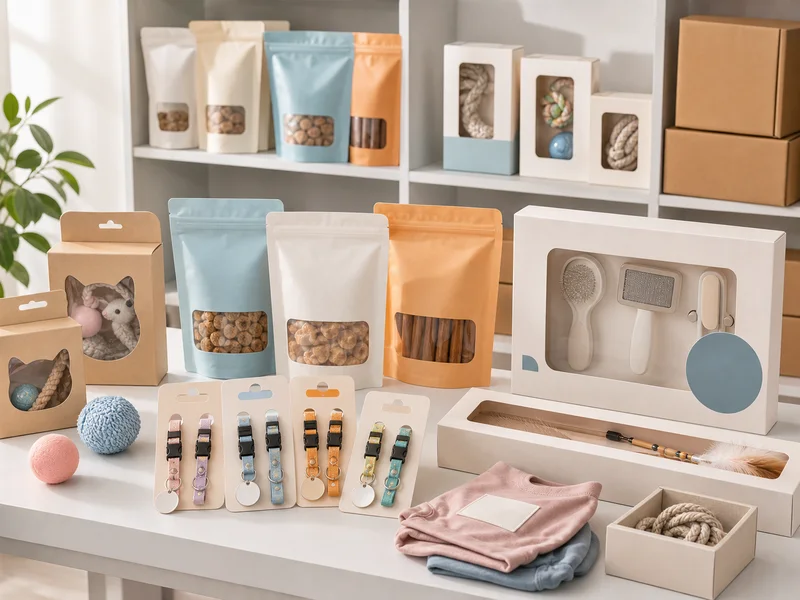
Many buyers ask for low MOQ and private label at the same time. This is possible for some products, but expectations must be realistic. Neutral packaging, sticker labels, hang cards, printed boxes, woven labels, and fully custom retail packaging have different MOQ and lead time requirements.
If you are still testing the market, start with a practical packaging level. For example, a neutral product with a branded sticker may be suitable for early validation. If sales data is positive, the next order can move toward packaging support with better retail packaging.
5. Keep sample approval practical
For low MOQ orders, sampling should focus on the most important risk points. A pet toy sample should check size, material, stitching or bonding, sound part stability, color, smell, and packaging. A grooming tool sample should check handle grip, metal finish, edge safety, and packaging protection. A cat teaser wand sample should check pole flexibility, cord strength, feather or plush attachment, and retail presentation.
Buyers should avoid requesting unnecessary custom changes before basic product-market fit is known. Too many changes can turn a simple trial into a development project, increasing cost and delaying launch.
6. Build the order around reorder potential
The best low MOQ trial order is designed for the next order. Ask these questions before confirming the first shipment:
- Can the same product be reordered with the same material and color?
- Can packaging be upgraded later without changing the core product?
- Can successful SKUs be combined with related products in a mixed order?
- Can the supplier maintain quality if quantity increases?
- Can inspection points be repeated for future orders?
This is especially important for pet stores and wholesalers. A one-time cheap purchase may not help if the product cannot be reordered. A structured sourcing route helps make the trial order part of a longer supply plan.
7. Use QC to protect the trial data
If a trial order has inconsistent quality, the sales result becomes unreliable. Slow sales may be caused by poor packaging, color mismatch, weak material, or damaged cartons rather than lack of demand. For this reason, even a small order should have basic quality checks.
For most pet supplies, useful QC points include product size, color, material feel, packaging count, carton marking, product function, surface defects, and sample comparison. For products that involve hygiene, disinfection, or functional claims, the importer should also verify local labeling and compliance requirements.
8. What to send when requesting a low MOQ quote
When contacting Xinji Pet Supplies, include your target products, estimated quantity, market, sales channel, packaging preference, and whether this is a trial order or a reorder program. If you have reference photos or competitor links, include them as product direction, not as a request to copy another brand.
We can then help prepare a more realistic route: suitable product options, MOQ direction, sample priorities, packaging level, QC notes, and whether the products should be consolidated with other categories through our supply services.